



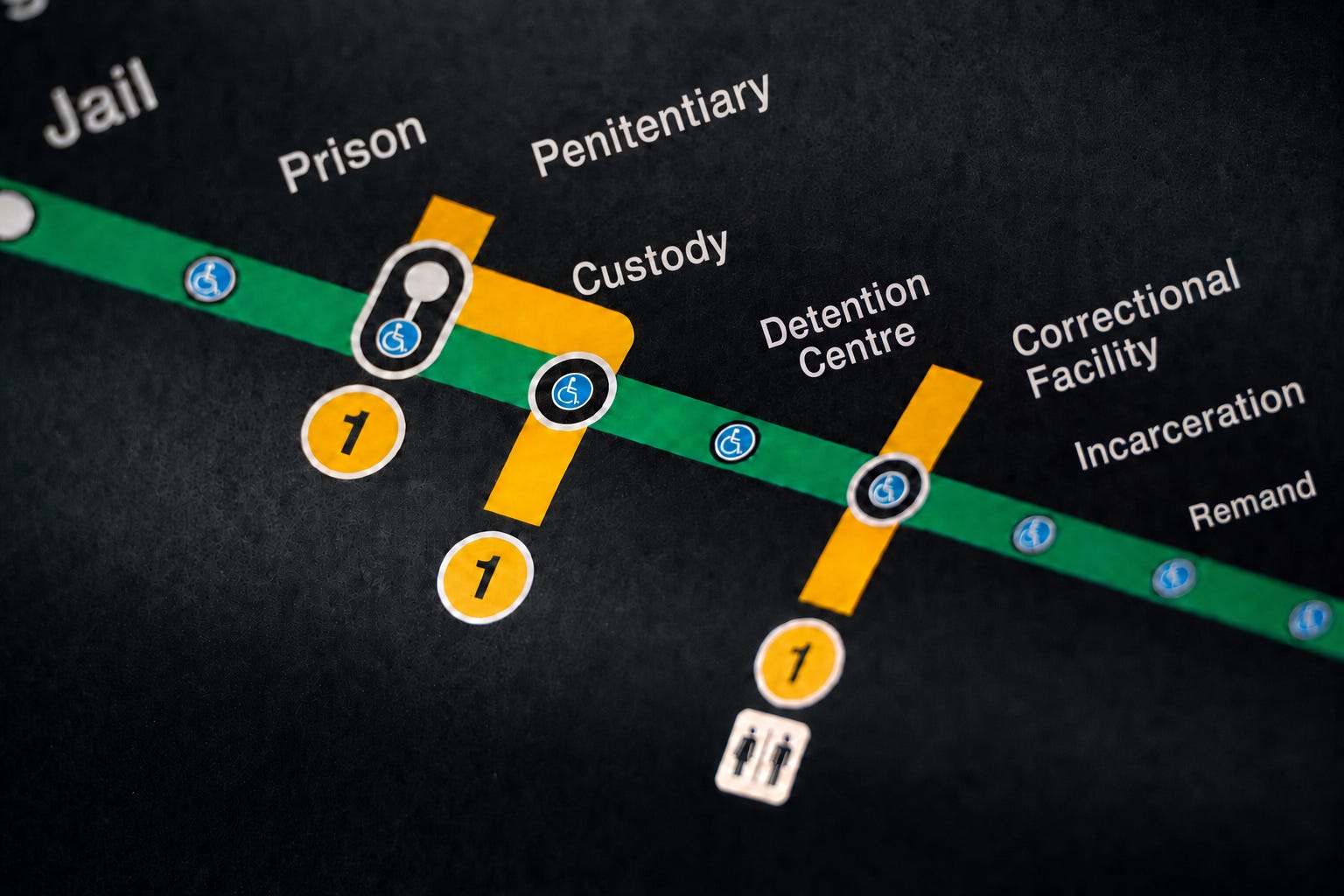
In yet another incoherent recent editorial, the Globe and Mail heaped praise on the Ontario government’s decision to give transit officers the powers of arrest normally reserved for police officers. Its premise was that people experiencing homelessness or addiction have become unmanageable. Better to lock them up, the Globe suggests, than allow them to make transit riders feel uncomfortable.
And just in case we begin to think they don’t care, the Globe devotes a couple of sentences acknowledging that governments should address root causes. After all, promised treatment centres might eventually materialize, note the writers, and people do need somewhere to live and somewhere to receive treatment. They also acknowledge that our transit system has become a shelter of last resort – “mobile shelters for troubled individuals.”
But never mind all of that. First: handcuffs and jail cells, followed by charges and courts.
The Globe editors aren’t alone in this view. Division and punishment make up the governing ideology of the Ontario government, and the media are simply amplifying it. For these people, it’s much better to use the most expensive and least effective intervention at our disposal, than to allow our collective, systemic policy failures to become all too obvious and too visible to the voting public.
People with far more understanding of the problem, not to mention more compassion, have been working on these issues for years. The crises of addiction and homelessness are not new. Doctors, lawyers, community workers, researchers, funders, and advocates have spent decades defining the problems, developing solutions, and pressing governments to act.
Sometimes they make progress. More often, governments do little – especially when enabled by uninformed opinion leaders who want to frighten politicians and bureaucrats away from sensible action.
The many people trying to respond constructively, drawing on both expertise and experience, are fighting a war on homelessness and addiction. They work alongside people who are homeless or living with addiction, and support what they say they need.
Organizations like TTCriders have been advocating for an expansion of Toronto’s emergency response service across the subway system. That pilot service tested an effective approach to resolving the issue of drug use and mental health crises on the TTC, the supposed crux of the problem that can only be solved by arrest and charges, according to the Globe.
The results of the pilot are telling: In six months, involving 528 calls for intervention, 6 per cent required TTC Special Constable support, and just 2 per cent then required police action. Most of the calls assigned to crisis workers could be resolved without police or special constables. So kudos to Toronto City Council who listened to advocates like TTCriders and others and voted in favour of expanding the service across the subway system.
If the voices crying out for arrests and prison really wanted to solve the human crisis afoot in our communities, if they really wanted to address the disorder that flows from it, they’d encourage approaches like Toronto’s. This is how a city that cares for every resident responds to a human crisis and the resulting disorder. But they don’t really want to solve the crisis. They simply want to manage its visibility.
These irresponsible voices are fighting a different war. Theirs is a war against homeless people and people living with addiction. It’s a heartless and hopeless war. It comes from the eternal conservative chant that poverty will always be with us, like inclement weather or nighttime, something we have to accept. But it ignores both the costs to society in health care and criminal justice and, more importantly, the benefit of lifting people up to attain their potential. Make no mistake: People have an inherent right to dignity, and their value doesn’t change simply because our social structures denigrate and fail them.
The more cynical among us might also wonder at the timing of the Globe’s editorial and how aligned it seems to the very prominent (and very expensive) taxpayer-funded political advertorials being run in the same newspaper trying to criminalize homelessness and poverty in Ontario. That is a very difficult moral position to defend.

